---
title: Why wine gives you a hangover (and how to avoid it)
description: Why have you got a hangover? It's the alcohol, stupid! Learn how your body processes alcohol and the symptoms of excess so you can enjoy wine without pain.
image: https://vincarta.com/hubfs/Imported_Blog_Media/shutterstock_565704370.jpg
---
[](https://vincarta.com)
[Blog](https://vincarta.com/blog)
[Contact us](https://vincarta.com/contact-us)
[Wine knowledge](https://vincarta.com/blog/tag/wine-knowledge)
# VIDEO: Why wine gives you a hangover (and how to avoid it)
[By Mirela Mart](https://vincarta.com/blog/author/mirela-mart)
Published 4 February 2017 Updated September 29 2024
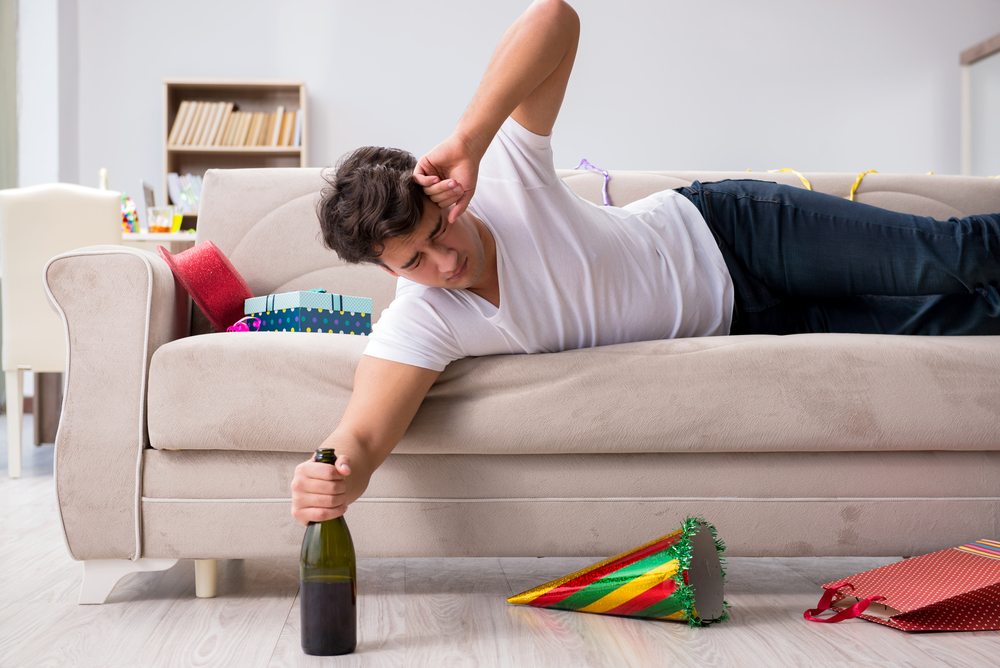
A lot of people ask me about hangovers, [sulfites](https://en.wikipedia.org/wiki/Sulfite) and intolerance to wine now that I am an official wine snob and part-time wine student at the WSET. It’s a surprisingly complex topic and this article tackles the whole wine hangover phenomenon.
## What is a hangover
If you do a Google search, you will discover that the most [common symptoms](http://www.mayoclinic.org/diseases-conditions/hangovers/basics/definition/con-20025464) of a hangover are:
- Fatigue and weakness
- Thirst
- Headaches and muscle aches
- Nausea, vomiting or stomach pain
- Bad sleep
- Increased sensitivity to light and sound
- Dizziness or a sense of the room spinning
- Shakiness
- Decreased ability to concentrate
- Mood disturbances, such as depression, anxiety and irritability
- Rapid heartbeat
But you don’t have to take the Mayo Clinic’s word for it. You can also discover the symptoms first hand if you knock back a couple of bottles of cheap plonk.
[](https://vincarta.com/hubfs/Imported_Blog_Media/shutterstock_566197348.jpg)
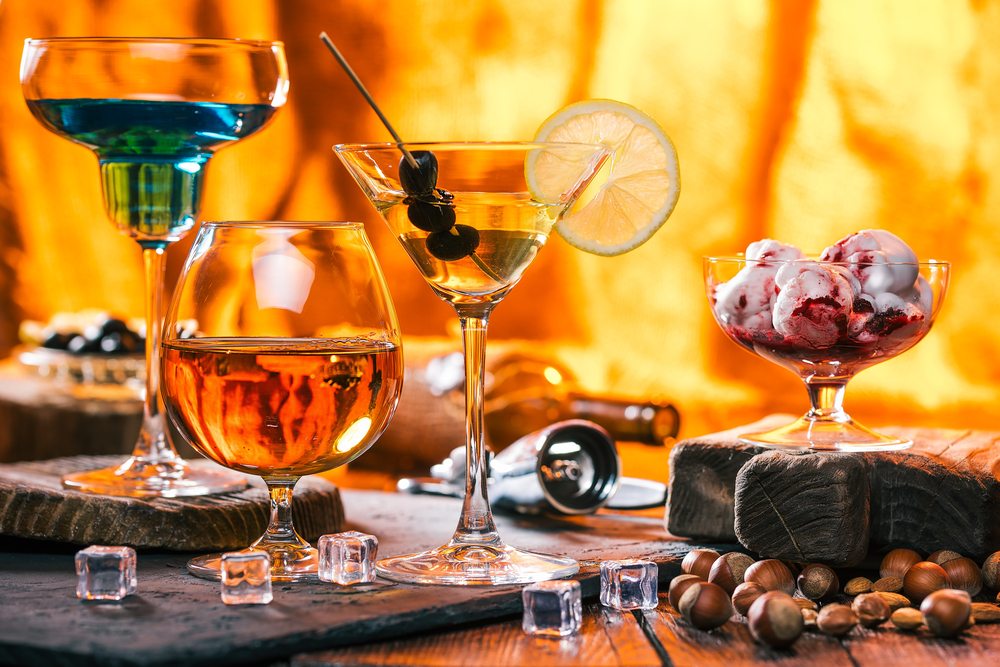
Anecdotally, and from my own experience, mixing drinks makes hangovers more likely and worse
[](https://resources.vincarta.com/wine-tasting-for-beginners)
## How much alcohol can your body process?
‘Moderation in all things,’ said Ralph Waldo Emerson. And this is the best way to avoid a hangover. Alcohol is, after all, a poison and a bottle of wine is likely to be 11-15% alcohol by volume (‘abv’).
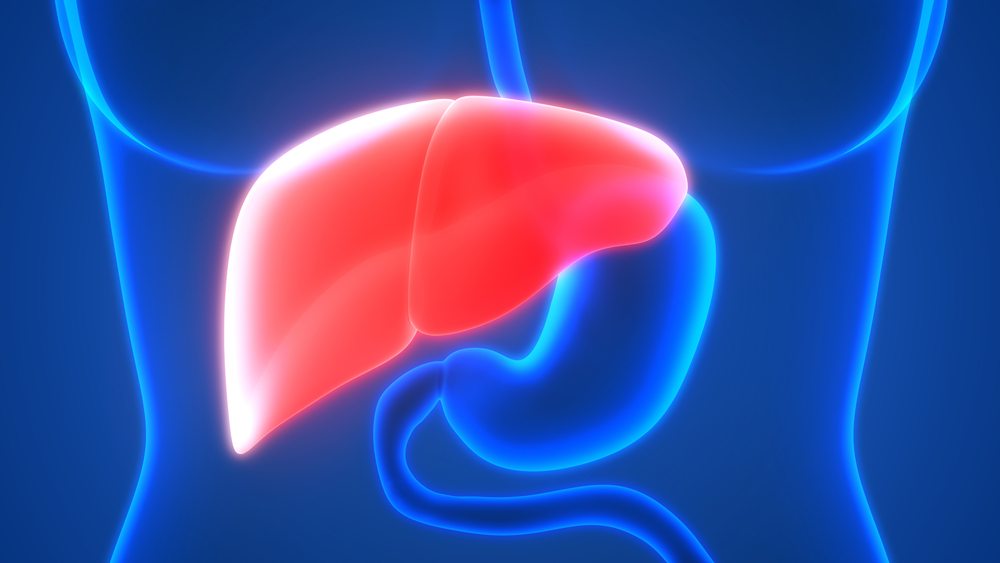
Our body can process, on average, one unit of alcohol (10ml of pure alcohol or 100 ml at 10% abv) per hour. This means that we process a 13% abv small glass of wine (125ml) in more than an hour and a half. How much does it take our liver to process half a bottle (three small glasses of wine)? The math is cruel: four to five hours.
[](https://vincarta.com/hubfs/Imported_Blog_Media/shutterstock_566203708.jpg)
The human liver takes 4-5 hours to process the alcohol in half a bottle of wine.
## What causes hangover?
I hear a lot of people blaming sulfites for the hangover effect of wine. **This is so wrong!** Sulfites have an important role to play in almost all winemaking since the Middle Ages.
We will look into this on another blog post but if you can eat a dried apricot without a hangover (it has more sulfites than a bottle of wine) and you get a hangover from drinking too much beer or spirits, then sulfites aren’t the cause of your hangover.
A small warning: it is going to get a bit scientific in terms of terminology, but in the end, what you need to know – spoiler alert – is that **the main culprit for a hangover is the alcohol itself. **
**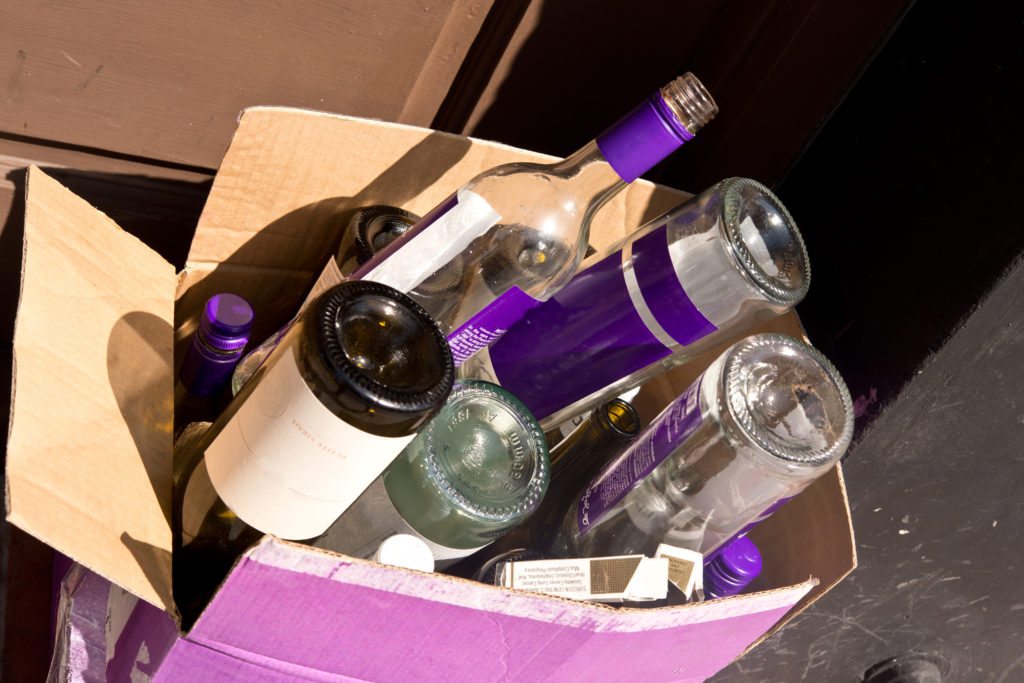**
Too much to drink, a recipe for a hangover
We produce alcohol in our stomach all the time when we digest the food, but it is in minuscule quantities, which our body can process easily. That’s why we are equipped to process alcohol. However, alcohol in large quantities is toxic for our bodies, as we have a limited ability to process it quickly. This explains why binge drinking is so dangerous, as it can lead to coma and death.
Coma and death are among the less pleasant aspects of alcohol poisoning so let’s put them to one side and explore the processes behind the more commonplace symptoms.
## Hangover-related headaches, nausea and vomiting
[Acetaldehyde](https://en.wikipedia.org/wiki/Acetaldehyde) is a component that occurs in nature in bread, fruits and oxidised drinks (eg: stale wine). It is also a by-product of alcohol oxidation. If you smell and taste Fino Sherry, you’ll experience acetaldehyde: bruised apples, hay and chamomile.
Our liver produces the same substance when it oxidizes and breaks the alcohol (ethanol) down ready for further processing into something similar to vinegar, which is harmless for the human body.
Geek-ing out a bit further, one of the two enzymes that break down the acetaldehyde, named [cysteine](https://en.wikipedia.org/wiki/Cysteine) is a sulfur-containing amino acid. So, here is evidence that our liver uses some form of sulfur, (which is the main component of sulfites) to break down the by-products of alcohol. This cysteine is helping our body produce a natural antioxidant ([glutathione](https://en.wikipedia.org/wiki/Glutathione)) that breaks down the alcohol toxins.
Our bodies can only produce a limited amount at a time so unprocessed alcohol sloshes around our body giving us headaches, nausea and vomiting as our body tries to get rid of the toxin.
Women produce less of the magic alcohol-eating substance than men. That’s why government guidelines recommend that women drink fewer units than men.
## Hangover tiredness
Alcohol has a depressive effect on the neurological system. What does this mean?
Our brain produces a stimulant, called [glutamate](http://neurotransporter.org/glutamate.html). We are more familiar with the MSG version, the food taste enhancer, but in our brain, glutamate helps carry information and it is important in memory, learning and our normal well-being. There is a trick though: it needs to be present at the right concentration and at the right time. Too little or too much is toxic for us.
[](https://vincarta.com/hubfs/Imported_Blog_Media/shutterstock_565221250.jpg)
In the first phase, alcohol inhibits our body to make glutamate. When we stop drinking, our brain tries to compensate and then produces more, creating a temporary imbalance. We will never be able to have a proper, relaxing sleep, in these circumstances, as our brain will be too excited trying to balance itself. This messes up with our [REM sleep](http://www.medicalnewstoday.com/articles/247927.php) cycles, the ones that help us feel rested, alert and perky and which help our memory and creativity.
We are all familiar with the outcome of a poor quality sleep: tiredness, trouble to concentrate, irritability, stress, etc.
In the [Sleep for Success](https://jamesmaas.com/books/) book, which I warmly recommend, the authors recommend that we should not drink three hours before we go to bed, as otherwise, to quote them: *“throughout the night you’ll be continually shaken and stirred”*.
## Hangover dehydration
We all know that alcohol dehydrates us. How many times we woke up really thirsty after having a bit too much to drink? And you don’t need to drink alcohol to know that dehydration causes headaches.
Alcohol inhibits a hormone in our brain ([vasopressin](https://en.wikipedia.org/wiki/Vasopressin)), which has the main role of retaining water in our bodies and constricting the blood vessels. As a result, water is sent directly to the kidneys and bladder and is not absorbed by the body. Hence, dehydration and thirst.
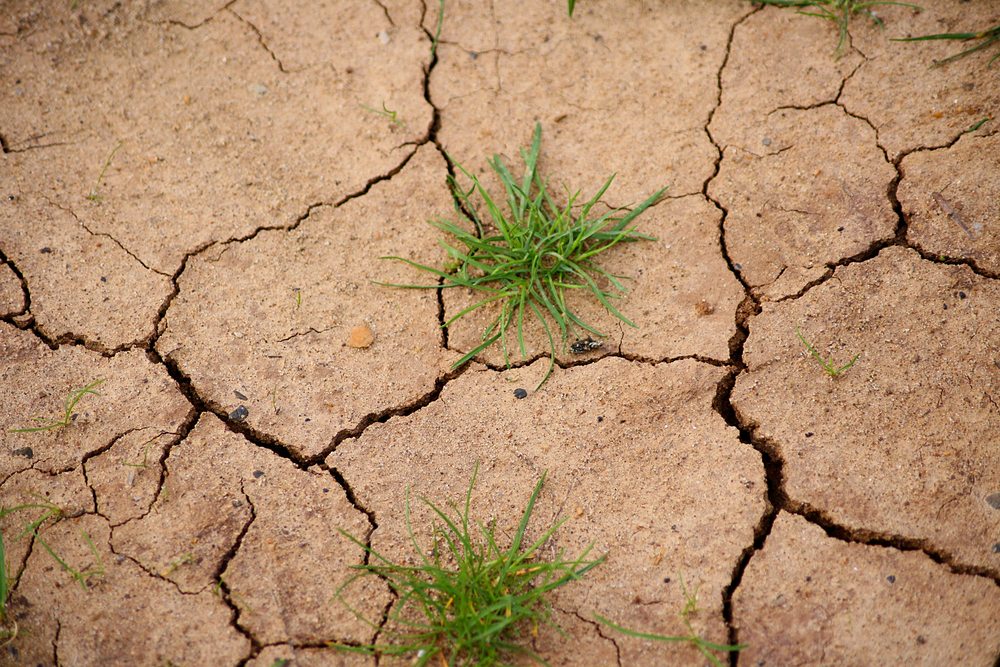
Alcohol causes hangovers and dehydration – like this parched earth
One glass of wine causes the body to eliminate up to three to four times the same quantity of water. That’s why is important to drink plenty of water when you drink alcohol. To fully compensate for the water loss, the math is: drink one litre of water for two small glasses of wine.
## Wine fermentation by-products and hangover
I can’t help but think that this next part would have made my high school chemistry teacher very proud, as although I loved inorganic chemistry, I hated organic chemistry with a passion. And now, here I am actually using what I learned.
[](https://vincarta.com/hubfs/Imported_Blog_Media/shutterstock_438887035.jpg)
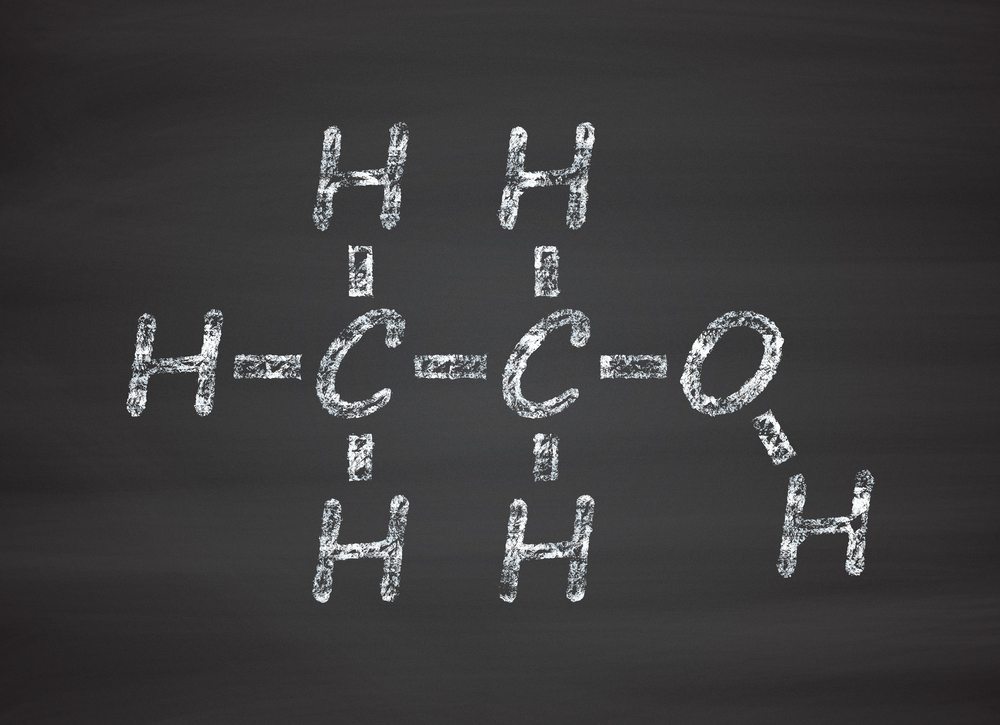
Ethanol formula (CH3CH2OH), the main alcohol in alcoholic drinks
Alcoholic fermentation creates different forms of alcohol:
- [Methanol](https://en.wikipedia.org/wiki/Methanol): is very toxic, but it is present in very tiny proportions in wine. It is found mainly in the [heads of the spirit distillation](https://vincarta.com/blog/sipsmith/), which are discarded. As a result, badly-distilled spirits are more dangerous than wine.
- [Ethano](https://en.wikipedia.org/wiki/Ethanol)l is the main type of alcohol in wine and any alcoholic drinks.
- Tail type of alcohols like [propranol](https://en.wikipedia.org/wiki/1-Propanol), butanol ([fuel oils](https://en.wikipedia.org/wiki/Fuel_oil)), which are not as toxic as methanol, **but can cause headaches and nausea**. If you are sensitive to these and experience headaches and nausea even if you drink a small glass of wine, stick to clear good quality spirits (gin, vodka), as they will not have them.
All these alcohols are important in the process of wine maturation because they interact with acids and form the fruit aromas in wine. The process of fermentation creates many of these flavours which are not present in grape juice. Grape juice just tastes of grapes but people write encyclopaedias about the taste of wine.
## How can you mitigate hangover effects?
In moderate quantities, alcohol has some beneficial effects. It acts like an anticoagulant, increases the high-density cholesterol (good cholesterol) which decreases the risk of heart diseases and helps reduce bad cholesterol. Wine has high quantities of potassium, which helps process salt. Red wine also contains powerful antioxidants, [resveratrol](http://www.resveratrolbenefits.com/benefits.html) being the best known.
However, alcohol is toxic and considered a drug, so if you know you are going to drink a bit more on one occasion, keep the below in mind:
- Know your body: pay attention when you drink to what causes you issues. You might be intolerant to some types of alcohols or components.
- Drink with moderation over a longer period, with food, as food slows down the absorption of alcohol, giving more time to the liver to do its job. **Remember we process half a bottle of wine in four to five hours.**
- Have plenty of water with your drinks. **Remember that we lose about half a litre of water with each small glass of wine.**
- Stop drinking at least two to three hours before you go to sleep. This will allow your brain to calm down.
- Accept defeat and deal with the consequences, by being more knowledgeable about what caused your hangover: **too much alcohol**.
Lastly, cutting back doesn’t necessarily mean self-denial. Picking up on Emerson’s theme, Oscar Wilde said, ‘Everything in moderation, including moderation’. There’s a lot of cheap, nasty wine out there. But there’s also a wonderful world of good, high-quality wine with character and personality. And so perhaps the best way to avoid a hangover is to switch from drinking more of the bad stuff to savouring a bit less of the good stuff. With wine, sometimes less really is more.
[](https://resources.vincarta.com/wine-tasting-for-beginners)
Share
[](http://www.linkedin.com/shareArticle?mini=true&url=https://vincarta.com/blog/wine-hangover&utm_medium=social&utm_source=linkedin) [](https://twitter.com/intent/tweet?original_referer=https://vincarta.com/blog/wine-hangover&utm_medium=social&utm_source=twitter&url=https://vincarta.com/blog/wine-hangover&utm_medium=social&utm_source=twitter&source=tweetbutton&text=VIDEO:%20Why%20wine%20gives%20you%20a%20hangover%20(and%20how%20to%20avoid%20it)) [](http://www.facebook.com/share.php?u=https://vincarta.com/blog/wine-hangover&utm_medium=social&utm_source=facebook)

## Related articles

### [What causes wine intolerance? Are you allergic to wine?](https://vincarta.com/blog/wine-intolerance)
We all know someone who can drink beer but not wine, or people who can drink white wine but not red. But why is this? Is it actually...
By Mirela Mart
[Wine knowledge](https://vincarta.com/blog/tag/wine-knowledge)
### [Is red wine good for you?](https://vincarta.com/blog/red-wine-good)
There is much debate around the rumoured health benefits of red wine. Aside from just tasting great, there are those who claim it can...
By Caragh Logan
[Wine knowledge](https://vincarta.com/blog/tag/wine-knowledge)
### [Wine quality and price: How much should you pay for a good bottle?](https://vincarta.com/blog/wine-quality-and-price)
Since we started this blog, I have been asking people how much they usually spend for a bottle of wine. I have received a range of answers....
By Mirela Mart
[Wine knowledge](https://vincarta.com/blog/tag/wine-knowledge)
[](https://vincarta.com)
Connect with us
Copyright © Vincarta 2014-2026. All rights reserved.
- [Contact us](https://vincarta.com/contact-us)
- [Cookies](https://vincarta.com/cookies)
- [Privacy](https://vincarta.com/privacy)
- [Terms](https://vincarta.com/terms)
```json
{
"@context" : "https://schema.org",
"@type" : "BlogPosting",
"author" : {
"@type" : "Person",
"name" : "Mirela Mart",
"url" : "https://vincarta.com/blog/author/mirela-mart"
},
"dateModified" : "2024-09-29T08:30:24.389Z",
"datePublished" : "2017-02-04T21:22:51.000Z",
"headline" : "Why wine gives you a hangover (and how to avoid it)",
"image" : [ "https://vincarta.com/hubfs/Imported_Blog_Media/shutterstock_565704370.jpg" ],
"mainEntityOfPage" : {
"@id" : "https://vincarta.com/blog/wine-hangover",
"@type" : "WebPage"
},
"publisher" : {
"@type" : "Organization",
"logo" : {
"@type" : "ImageObject",
"url" : "https://vincarta.com/hubfs/cropped-Vincarta-logo-with-trademark-470x110-1-1.png"
},
"name" : "Vincarta"
}
}
```
```json
{
"@context" : "https://schema.org",
"@type" : "Corporation",
"description" : "Vincarta - a wine blog by two wine geeks.",
"logo" : "https://vincarta.com/hs-fs/hubfs/cropped-Vincarta-logo-with-trademark-470x110-1-1.png?width=800&height=160&name=cropped-Vincarta-logo-with-trademark-470x110-1-1.png",
"mainEntityOfPage" : {
"@id" : "https://vincarta.com/blog/wine-hangover",
"@type" : "WebPage",
"description" : "Why have you got a hangover? It's the alcohol, stupid! Learn how your body processes alcohol and the symptoms of excess so you can enjoy wine without pain."
},
"name" : "Vincarta",
"sameAs" : [ "https://www.facebook.com/vincarta/", "https://www.linkedin.com/company/vincarta", "https://www.instagram.com/vincarta/" ],
"url" : "https://vincarta.com"
}
```