---
title: "Protectionism and wine: how politics affects the wine trade"
description: With attacks on free trade from Brexit, Trump and anti-globalisation rhetoric, what do wine lovers need to know about the risks?
image: https://vincarta.com/hubfs/Imported_Blog_Media/rebecca-matthews-317606-unsplash.jpg
---
[](https://vincarta.com)
[Blog](https://vincarta.com/blog)
[Contact us](https://vincarta.com/contact-us)
[Wine knowledge](https://vincarta.com/blog/tag/wine-knowledge)
# Protectionism and the wine trade
[By Matthew Stibbe](https://vincarta.com/blog/author/matthew-stibbe)
Published 7 December 2019 Updated September 24 2024
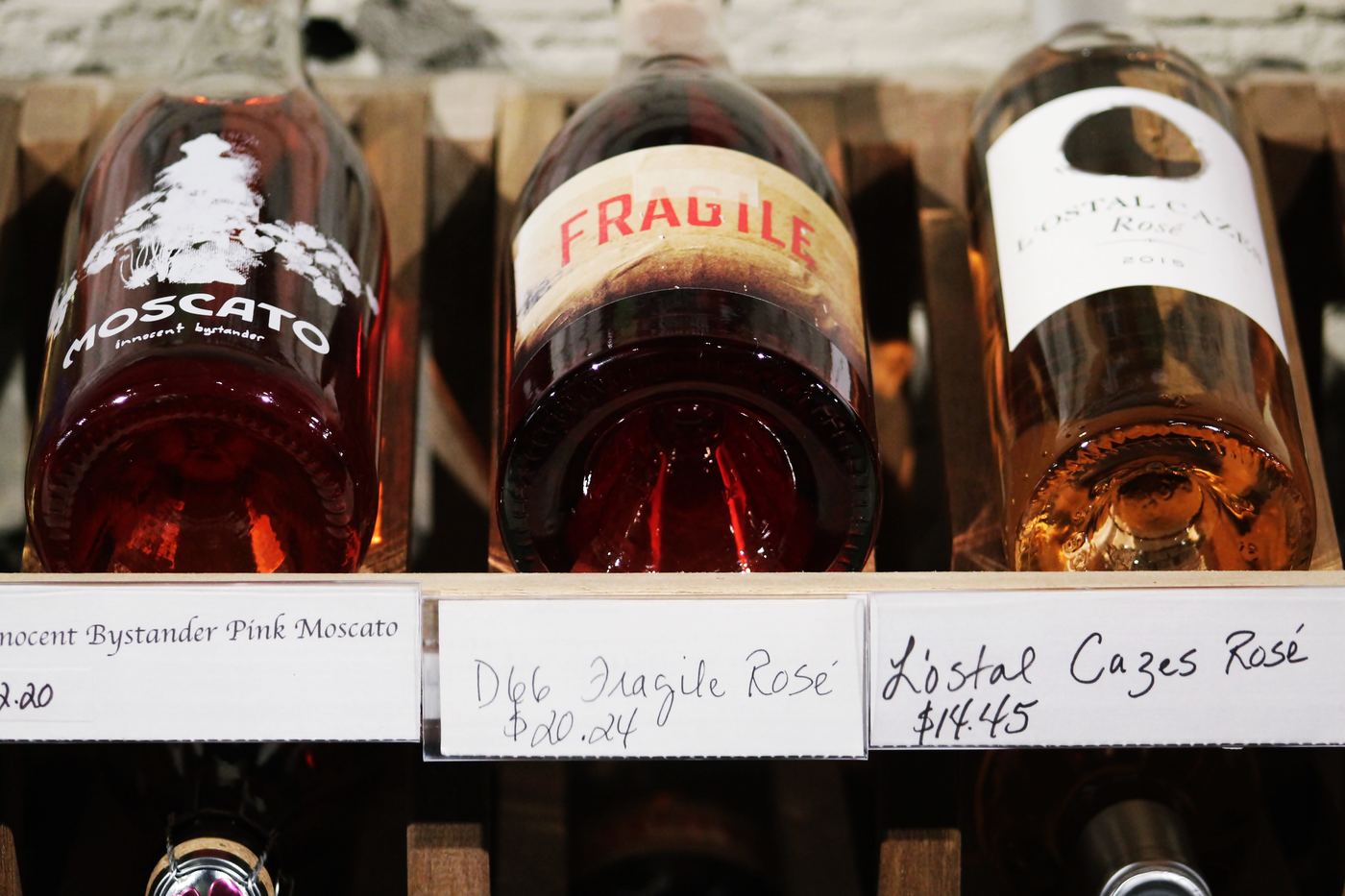
Protectionism is a hot topic in the drinks industry. With rising fears from[Brexit](https://vincarta.com/blog/wine-and-brexit/) and anti-globalisation rhetoric, many fear their favourite international wine may be at risk. And now, Donald Trump [threatening](https://www.nytimes.com/2019/12/02/business/trump-tariff-france.html) to slap huge tariffs on French wine. But what do you, as a wine lover, need to know? How does protectionism affect wine lovers?
*“Free trade, one of the greatest blessing which a government can confer on a people, is in almost every country unpopular.”*
*– Thomas Babington Macaulay (1824)*
In this article we examine the ins and outs of the wine trade. From tariffs, trade agreements, procurement issues and government monopolies, we guide you through everything you need to know about the global issues threatening to come between you and your favourite tipple.
## **The 7 tools of wine protectionism**
The instruments of protection vary from the blunt to the sharp; the choice depending on the political and economic objectives of the government that uses them. In this guide we explore seven of these tools.
### **1. Drink’s Tariffs**
Tariffs are taxes which **increase the cost to consumers of imported goods and services**, they are the most visible and bluntest form of protection
Governments typically charge tariffs on alcoholic drinks as percentage of the price (‘ad valorem’) or in relation to volume or alcohol strength (‘specific’) or a combination of the two. For example, **duty in the UK is based on the type of beverage, the alcoholic strength and the volume**, ranging from 8.42 pence per litre for low-alcohol beer up to 369.72 pence per litre for sparkling wine, and more for [spirits](https://www.gov.uk/tax-on-shopping/alcohol-tobacco).
Specific tariffs based on volume are more popular in Europe and North America and ad valorem tariffs are more common in the Asia-Pacific region with the exception of [Japan and Malaysia](http://www.sciencedirect.com/science/article/pii/S221297741200004X).
The World Trade Organization caps tariffs for members by most-favoured-nation rules which, broadly, restrict discriminatory rates. As new countries join the WTO, tariffs have tended to fall. For example, China’s tariff on wine imports fell from 65% in 1999 to 14% in [2010](https://doi.org/10.1093/erae/jbv008).
[](https://resources.vincarta.com/wine-tasting-for-beginners)
### 2. **Sanitary and phytosanitary measures**
**Sanitary and phytosanitary (SPS) measures and other technical barriers to trade (TBT) are also frequently used tools of protectionism**. ‘As tariffs have been lowered, demands for protectionism have led to new technical barriers.’ These measures relate to:
- **Labelling**, for example about allergens, alcohol levels or geographical indications.
- **Food standards**, for example to set maximum levels of sulphites or residual agrichemicals in wine or to specify winemaking practices.
- **Conformity assessment**, such as sampling, laboratory testing and inspection rules.
- **Packaging**, such as regulation of bottle size or shape.
- **Food containers**, such as restrictions on certain types of plastic when used for human food.
**Human health**, such as warnings about possible health risks from consuming [alcohol](http://www.iard.org/policy-tables/beverage-alcohol-labeling-requirements/). The extent and complexity of these barriers varies considerably from country to country.
Under the aegis of the WTO, there has been some movement towards harmonisation and mutual recognition. Bilateral agreements, such as the U.S.-EU Agreement on Trade in Wine, have also moved in the same direction. However, these efforts have not been wholly effective or free from controversy. For example, few wine standards have been defined.
[](https://vincarta.com/hubfs/Imported_Blog_Media/sydney-rae-435583-unsplash.jpg)
### **3. Preferential market access**
**As multilateral WTO trade talks have stalled, bilateral agreements have become more common**. Examples include the free trade agreements between the EU and [South Korea](http://ec.europa.eu/trade/policy/countries-and-regions/countries/south-korea/index_en.htm.) and [Chile](http://ec.europa.eu/trade/policy/countries-and-regions/countries/chile/index_en.htm.). These agreements benefit producers in the countries that are party to the agreement at the expense of third party exporters who may face higher tariffs.
### **4. Wine producer subsidies**
Subsidising production, such as the EU’s direct payments to grape growers and winemakers as well as the EU export refund, raises barriers to imports indirectly by reducing the cost of local production. This is a form of protectionism because **imported drinks must compete against lower prices from subsidised local producers.**
### **5. Protected names**
**Geographical Indications (GIs) limit importers’ ability to use certain names and descriptions.** Examples include the EU’s Protected Denomination of Origin and Protected Geographical Indication (PGI). In addition, ‘traditional expressions’ such as *chateau* or *sur lie* and ‘semi-generic names’ such as Claret, Hock or Port can be protected by bilateral agreement. As the number of GIs grows they are becoming increasingly controversial.
### **6. Government monopolies**
Where countries, such as Finland, Sweden or Norway, have state monopolies or restrict online sales , this can raise barriers to entry for [importers](https://www.cbi.eu/sites/default/files/market_information/researches/product-factsheet-europe-online-market-channels-wine-2016.pdf) by **limiting distribution options** **or giving state-controlled organisations a role in choosing which products are available.** To a lesser extent, licensing rules can increase costs for importers or make it difficult for new entrants to gain access to a given market. For example, the UK requires all imports to go through an [Authorised Importer](https://www.gov.uk/guidance/import-alcohol-into-the-uk) or use a time-consuming paper approval process for [each shipment](https://www.gov.uk/guidance/the-alcohol-wholesaler-registration-scheme-awrs).
### **7. Bureaucratic challenges**
Import quotas, customs procedures, port of entry requirements, foreign currency controls, bureaucratic bottlenecks and ‘go-slows’ can all be used by governments in opaque and selective ways to reduce imports or increase their cost. In addition, **these limitations create a risk of corruption which further raises import costs.**
## **Protectionism and the global drink’s trade**
**Despite protectionist measures, global trade in wine and spirits has increased.** European spirits exports doubled between [2004 and 2015](http://spirits.eu/policies/external-trade/key-data.). Similarly, between 1997 and 2012, wine exports as a percentage of global production increased from 23.6% to 41.3%.
**But this progress masks high levels of residual protectionism overall** and research suggests that ‘the decreasing trend for tariffs has for the most part been compensated by more stringent technical barriers.’
## **A little local difficulty**
Global figures blur out the local and political aspects of protectionism. Governments often tax imports to protect domestic producers and the jobs they create. For example, lobbyists in Brazil made this argument when they pushed for wine tariffs of 55% in [2012](https://www.thedrinksbusiness.com/2012/03/brazil-proposes-protectionist-measures/). They were acting for wine producers and unions representing wine industry workers.
In the context of global overproduction, rising quality and falling prices, sales of imports nearly doubled from 2005 to 2011, while sales of Brazilian fine wines shrank by [11 percent](https://www.thedrinksbusiness.com/2012/03/brazil-proposes-protectionist-measures/). Brazil’s domestic producers wanted to protect their businesses, revenues and employment.
While the proposals were ultimately withdrawn, they are a good illustration of the naked political and emotional forces behind protectionism. They were, in fact, an extension of ongoing practice not a dramatic change. Brazil still maintains a tariff of [27%](https://www.wineinstitute.org/international_trade_policy) on wine and, as a result, domestic wine ‘continues to dominate the Brazilian market, with only 25% of wines being [imported](http://www.wineintelligence.com/wp-content/uploads/2017/03/Wine-Intelligence-Brazil-Landscapes-2017-Brochure-1.pdf).’ **Domestic producers benefit while consumers have less choice and pay higher prices.**
## **When wine gets political**
In 2013, Russian banned Moldovan wine on the spurious pretext that it contained a health risk. According to The Economist, about [10%](https://www.economist.com/blogs/economist-explains/2013/11/economist-explains-18) of all the wine drunk in Russia comes from Moldova and wine exports to Russia is an important source of income for the small country. Russia used a technical barrier to trade for purely political ends: stopping Moldova signing trade agreements with the EU. This shows that trade barriers and **free trade rules don’t exist in isolation from diplomacy and even geopolitics.**
## **Having your whisky and drinking it too**
The next example illustrates another important aspect of protectionism as applied to beverages. On the production side, they are seen as an agricultural product (for wine) or a manufactured product (for spirits). All politicians want to be seen defending their farmers and manufacturers. On the consumption side, however, **alcohol is a luxury, not a necessity. This makes ‘sin taxes’ more palatable politically than other sources of revenue.**
Indians drank more than [1.5 billion litres of Whisky](http://uk.businessinsider.com/the-biggest-whiskey-market-in-the-world-2015-6?r=US&IR=T.) in 2014. Domestic producers such as Allied Blenders, United Spirits and John Distilleries produced the majority of it protected by duty of [150%](http://www.scotch-whisky.org.uk/news-publications/news/scotch-whisky-industry-joins-uk-prime-minister-on-trade-visit-to-india) on imported spirits plus local taxes, state levies and compliance fees. As a result, Scotch Whisky only accounts for a fraction of Indian consumption (just[41 million bottles](http://www.scotch-whisky.org.uk/news-publications/news/scotch-whisky-industry-joins-uk-prime-minister-on-trade-visit-to-india)). Therefore, **Indian politicians combine the protection of major businesses and a lucrative source of revenue: they are having their whisky and drinking it.**
## **Protecting farmers in the EU**
**Like Indian spirit producers, farmers in Europe are a powerful political force**. As a result, ‘since the adoption of the Common Agricultural Policy in 1962, European agricultural policy has remained distinctly protectionist,’ says [Caroline Margiotta](https://www.econ-jobs.com/research/60921-European-Union-Trade-Protectionism-The-Transatlantic-Trade-and-Investment-Pact-and-their-Implications-for-the-Competitiveness-of-Global-Wine-Markets.pdf). For wine producers, this protection takes several forms:
- Annual subsidies to put a floor under prices, ‘with €280.5M in subsidies allocated to France, €334M allocated to Italy, and €353M allocated to Spain each year until 2017’.
- Tariffs on imports. The EU common external tariff on wine ranges from €0.13 to €0.32 per litre.
- Export subsidies and marketing investments worth €522 million.
- Support for vineyard restructuring, costing the European Commission €675 million.
- Strict Geographical Indication regulations and label requirements. [Nearly half](http://ec.europa.eu/agriculture/markets/wine/e-bacchus/index.cfm?event=statistics&language=EN)(44%) of the GIs listed on the E-Bacchus system are from the EU.
[](https://vincarta.com/hubfs/Imported_Blog_Media/xavi-moll-15959-unsplash.jpg)
Seen from the perspective of American producers:
*‘despite the inefficient expenditure they involved, the EU’s earlier agricultural protections have played an important role in insulating EU wine producers, and have provided a good incubator for the development of new vineyards. However,* ***the EU’s tariffs, export subsidies, and other nontariff barriers have presented a large challenge to US wine producers, preventing small-scale producers from being able to export their wines to the EU market****. EU consumers are also adversely affected by a* ***narrowing of the selection of wines available, as well as by the higher prices which result from the EU’s production subsidies.’***
## **Geographical Indicators**
Although EU tariffs on wine imports are relatively low, **non-tariff barriers (NTBs) such as the use of Geographical Indicators (GIs) can be as much of an impediment to trade as** [**tariffs**](http://siteresources.worldbank.org/INTRES/Resources/469232-1107449512766/ecoj_2209.pdf).
Companies use of GIs to reassure consumers about the provenance of wine and certain spirits but GIs also protect traditional producers and make it **harder for newer producers to market themselves**, for example by selling ‘Australian Champagne’ or ‘Napa Claret’.
For example, in 2010, Wine Institute and WineAmerica petitioned the EU for permission to use 13 traditional terms, such as ‘chateau’, for use on U.S. wine. Only [two terms](https://www.wineinstitute.org/international_trade_policy) were approved. This means that American producers with names like Chateau Ste. Michelle cannot use their name on wines exported to the EU.
This narrow example raises a broader point. To what extent should a GI only be permitted for products that possess a ‘given quality, reputation or other characteristics’ that is ‘easily attributable to its geographical origin’ as opposed to being used as a way to protect incumbent producers?
*‘Given that vineyards in [Champagne](https://vincarta.com/blog/10-champagne-facts) can fetch prices of €1 million per hectare or more compared to prices of around €4000 per hectare outside the region, there is clearly a lot at stake’*
## **Vincarta’s thoughts**
**Global trade has increased dramatically since the end of the war**, from $61 billion in 1950 to a staggering [$15,956 billion](https://www.statista.com/statistics/264682/worldwide-export-volume-in-the-trade-since-1950/) in 2016. **A quarter of this growth was due to tariff reductions** due to liberalisation under the Global Agreement on Tariffs and Trade and its successor the World Trade Organisation as well as the development of regional trading blocs such as the European Economic Area and bilateral free-trade agreements.
As a result, **‘average tariffs on manufactured goods have dropped to less than 5 percent in most developed countries over the post-war period.’** Agricultural tariffs have also fallen but are generally higher than tariffs on manufactured goods.
**The drinks business has shared in these benefits**. In the 1960s only 10 percent of global wine was exported. By 1990, this had reached only 15 percent. But by 2010, more than [30 percent](http://www.sciencedirect.com/science/article/pii/S221297741200004X)of global wine production was exported. **As a result, consumers have seen wider choice, better quality and lower prices**
UK supermarket shelves bear witness to this dramatic change: New Zealand Sauvignon Blanc and Argentinian Malbec sit alongside wines from old world regions. But the impact is global and r**adically new trading partnerships have sprung up**. For example, China is now Chile’s most [lucrative wine export market](http://www.decanter.com/wine-news/china-now-chiles-lucrative-wine-export-market-366612/).
## **Why the drinks trade is still under threat**
**But these gains are increasingly coming under threat.** Further liberalisation looks ever more challenging. The mercantilist idea that trade is a zero-sum game with winners and losers is profoundly mistaken but increasingly popular.
Both Russia and Moldova are members of the WTO and this was no deterrent to Russia’s power play. This raises the worrying prospect that populist leaders in other countries, including the USA, may also subvert the rules-based post-war trade settlement with impunity.
For example, there are, perhaps, echoes of the same *realpolitik* in Boris Johnson’s [alleged comments](http://www.bbc.co.uk/news/uk-37995606) that Italy would support Britain’s continued access to the common market after Brexit because ‘you don’t want to lose the [Prosecco](https://vincarta.com/blog/the-hidden-cost-of-cheap-prosecco/) exports.’
**All protectionism is inherently political.** It involves state intervention in the free market, favouring some groups over others. Typically, protectionism redistributes income from consumers to producers. **When considering who might benefit from growing protectionism, follow the money.**
## **The protectionist paradox**
**Protectionists believe that limiting imports encourages the growth of local industry and defends jobs; classical economics teaches us the reverse: that opening markets to trade creates jobs and makes local producers more competitive.**
Brazil’s protectionism is also a good example of the underlying economic reality of protectionism:
*‘Tariffs and quotas on imports redistribute income from consumers to producers, but do so inefficiently. That is, trade barriers produce a net economic loss because the cost to consumers far exceed the benefits to producers.’*
The paradox of protectionism arises because protectionism gives a huge benefit to a few people and costs a large number of consumers a very small amount. **In short, protectionism is as politically seductive as it is economically illiterate.**
**Consequently, while some producers and their political patrons will toast increasing protectionism, the economy as a whole will suffer and the rest of us will be left to drown our sorrows.**
[](https://resources.vincarta.com/wine-tasting-for-beginners)
Share
[](http://www.linkedin.com/shareArticle?mini=true&url=https://vincarta.com/blog/wine-protectionism&utm_medium=social&utm_source=linkedin) [](https://twitter.com/intent/tweet?original_referer=https://vincarta.com/blog/wine-protectionism&utm_medium=social&utm_source=twitter&url=https://vincarta.com/blog/wine-protectionism&utm_medium=social&utm_source=twitter&source=tweetbutton&text=Protectionism%20and%20the%20wine%20trade) [](http://www.facebook.com/share.php?u=https://vincarta.com/blog/wine-protectionism&utm_medium=social&utm_source=facebook)

## Related articles
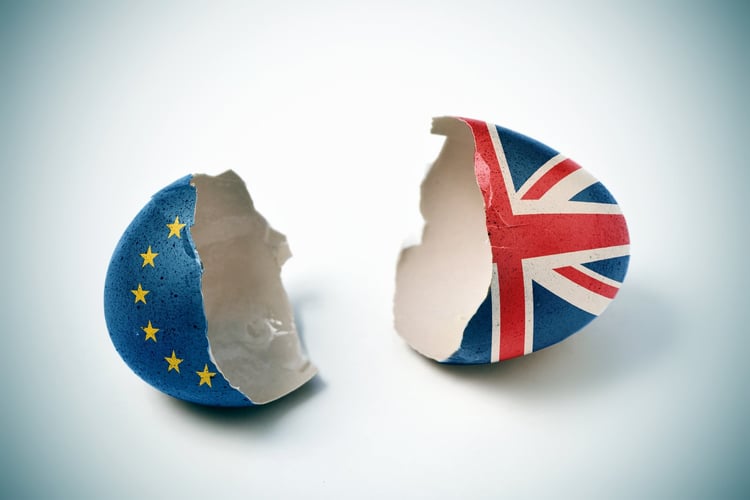
### [Brexit and the British wine trade](https://vincarta.com/blog/wine-and-brexit)
How will Brexit affect the wine trade in the UK? Consumers, producers and retailers all stand to be affected. Even teetotal taxpayers have...
By Matthew Stibbe
[Wine knowledge](https://vincarta.com/blog/tag/wine-knowledge)
### [How to read a wine label: 7 essential things to look for](https://vincarta.com/blog/how-to-read-a-wine-label)
As the saying goes: always read your wine label before popping the cork.
By Claire Poskitt
[Wine knowledge](https://vincarta.com/blog/tag/wine-knowledge)
### [Georgian wine: Your guide to the world’s oldest wine producer](https://vincarta.com/blog/your-guide-to-georgian-wine)
With more than 500 grape varieties and eight millennia of viticulture history, Georgia is one of the most up and coming wine producing...
By Ioana Negulescu
[Wine knowledge](https://vincarta.com/blog/tag/wine-knowledge) [Wine regions](https://vincarta.com/blog/tag/wine-regions)
[](https://vincarta.com)
Connect with us
Copyright © Vincarta 2014-2026. All rights reserved.
- [Contact us](https://vincarta.com/contact-us)
- [Cookies](https://vincarta.com/cookies)
- [Privacy](https://vincarta.com/privacy)
- [Terms](https://vincarta.com/terms)
```json
{
"@context" : "https://schema.org",
"@type" : "BlogPosting",
"author" : {
"@type" : "Person",
"name" : "Matthew Stibbe",
"url" : "https://vincarta.com/blog/author/matthew-stibbe"
},
"dateModified" : "2024-09-24T11:24:08.841Z",
"datePublished" : "2019-12-07T15:14:00.000Z",
"headline" : "Protectionism and wine: how politics affects the wine trade",
"image" : [ "https://vincarta.com/hubfs/Imported_Blog_Media/rebecca-matthews-317606-unsplash.jpg" ],
"mainEntityOfPage" : {
"@id" : "https://vincarta.com/blog/wine-protectionism",
"@type" : "WebPage"
},
"publisher" : {
"@type" : "Organization",
"logo" : {
"@type" : "ImageObject",
"url" : "https://vincarta.com/hubfs/cropped-Vincarta-logo-with-trademark-470x110-1-1.png"
},
"name" : "Vincarta"
}
}
```
```json
{
"@context" : "https://schema.org",
"@type" : "Corporation",
"description" : "Vincarta - a wine blog by two wine geeks.",
"logo" : "https://vincarta.com/hs-fs/hubfs/cropped-Vincarta-logo-with-trademark-470x110-1-1.png?width=800&height=160&name=cropped-Vincarta-logo-with-trademark-470x110-1-1.png",
"mainEntityOfPage" : {
"@id" : "https://vincarta.com/blog/wine-protectionism",
"@type" : "WebPage",
"description" : "With attacks on free trade from Brexit, Trump and anti-globalisation rhetoric, what do wine lovers need to know about the risks?"
},
"name" : "Vincarta",
"sameAs" : [ "https://www.facebook.com/vincarta/", "https://www.linkedin.com/company/vincarta", "https://www.instagram.com/vincarta/" ],
"url" : "https://vincarta.com"
}
```